
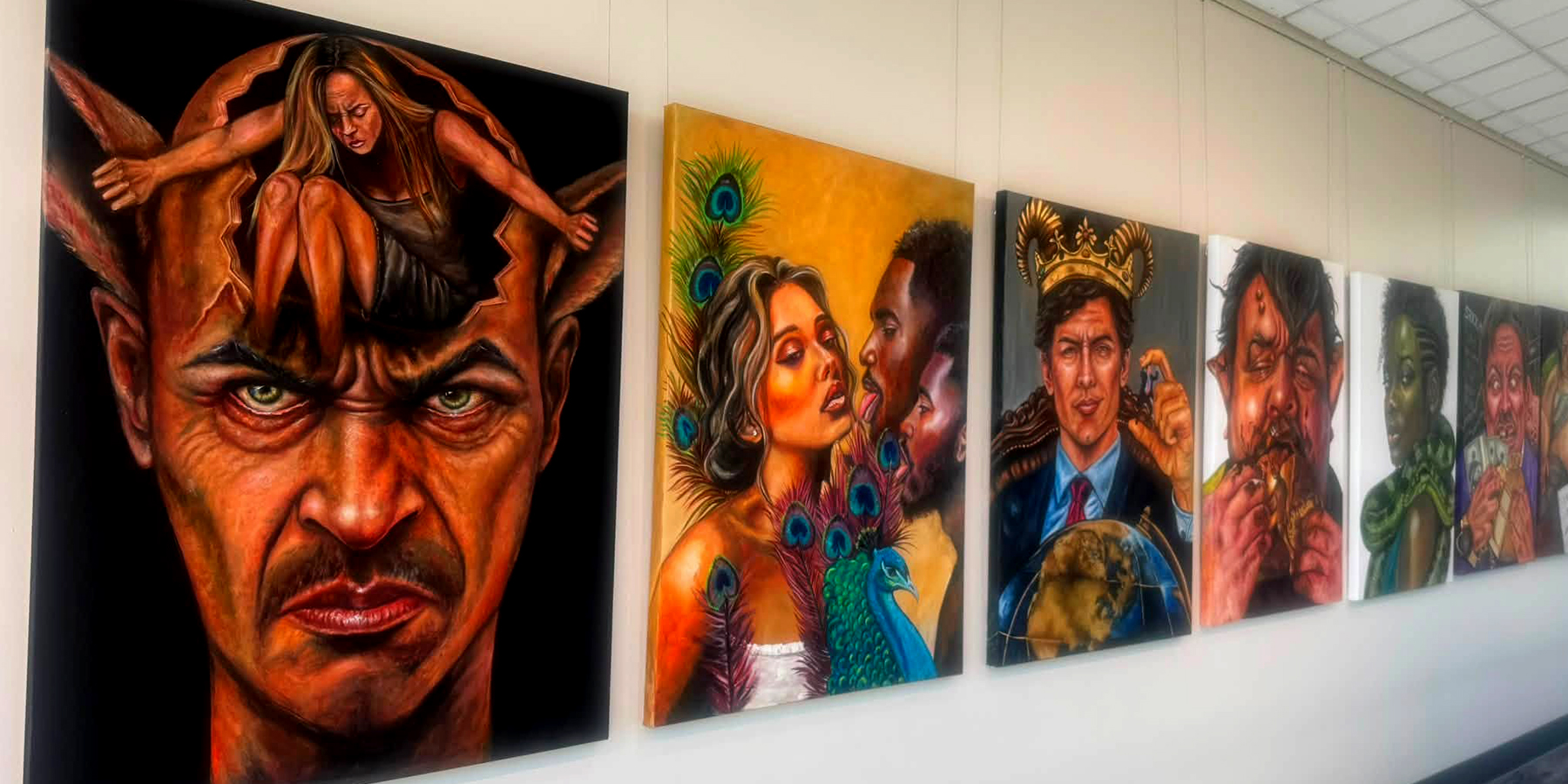

Art has always had a way of making us look at ourselves.
Sometimes it happens through beauty. Sometimes through emotion. And sometimes, the artwork forces us to confront parts of ourselves that we may not necessarily want to see.
That is the idea behind Grand Rapids 2D visual artist E’lla Webber’s ArtPrize entry, “The 7 Deadly Sins,” currently on display at DeVos Place, 303 Monroe Ave NW, Grand Rapids, Michigan.
Webber is no stranger to ArtPrize. This year, she has seven pieces entered into the competition, giving visitors an opportunity to experience her work while also getting a glimpse into the mind of a local artist who uses visual storytelling to explore everyday life.
For Webber, “The 7 Deadly Sins” isn’t simply about the traditional concepts of Wrath, Lust, Pride, Gluttony, Envy, Greed and Sloth. It’s about what happens when human behavior moves into excess.
“To me, it’s just people living everyday lives,” Webber explained. “It’s expressing different seven deadly sins that can possibly happen when we overdo something or things are done in excess.”
That idea is reflected throughout the collection, with each sin represented through a person, a particular situation and an animal that Webber believes connects to the personality of that sin.
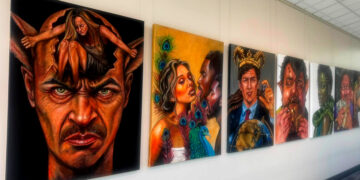
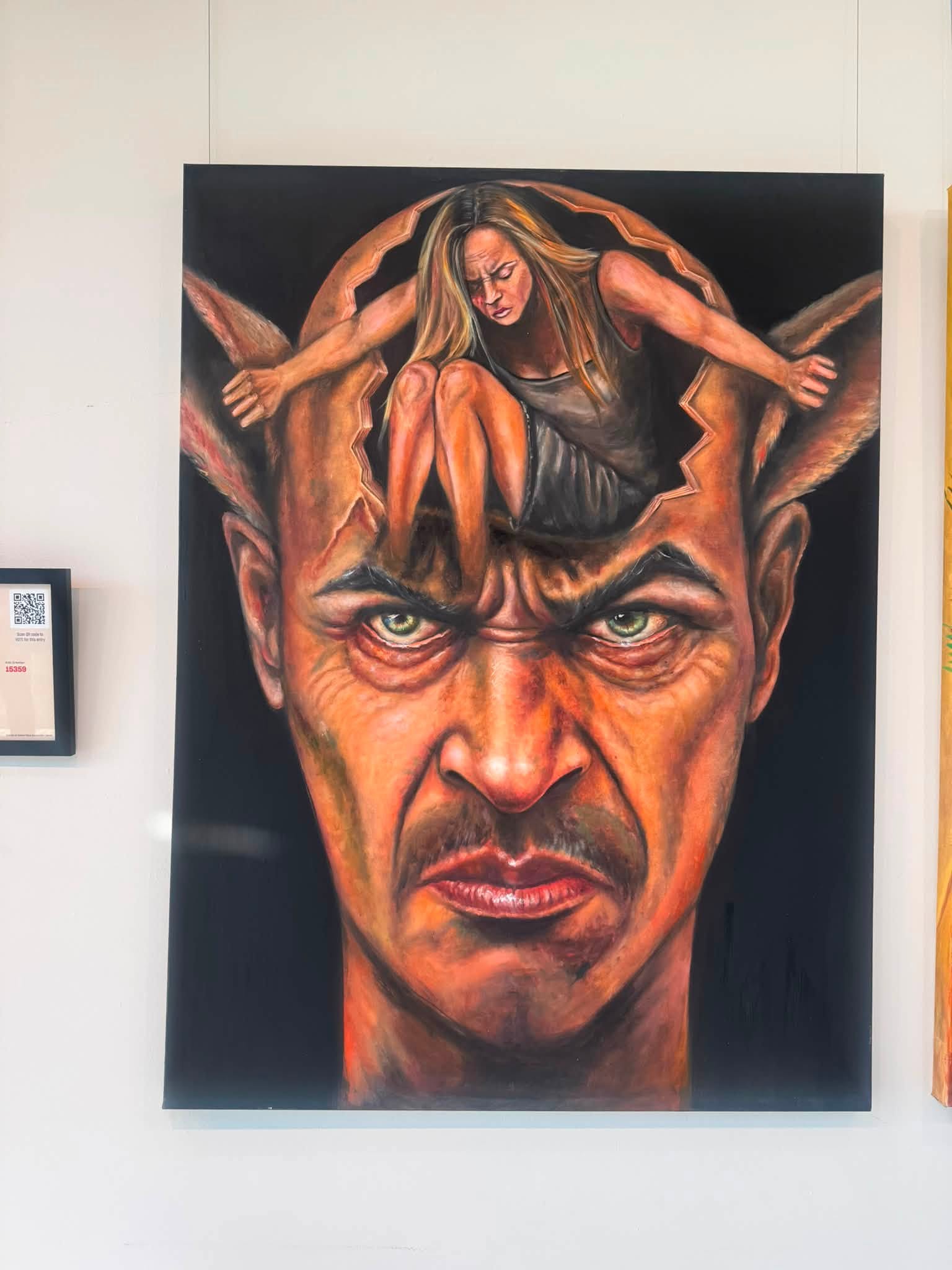 The first piece is Wrath, represented by a woman breaking free from a man’s head. The image tells a story of escape. Webber describes the woman as someone who has finally broken through the mental and emotional control of someone who treated her badly. A small amount of blood appears from her eye, but Webber intentionally kept the imagery from becoming overly graphic.
The focus isn’t on the violence.
It’s on the breakthrough.
“She’s escaping how mean he was to her, how evil he was to her, how he treated her bad,” Webber said.
The animal connected to Wrath is the wolverine, adding another visual layer to the painting’s message.
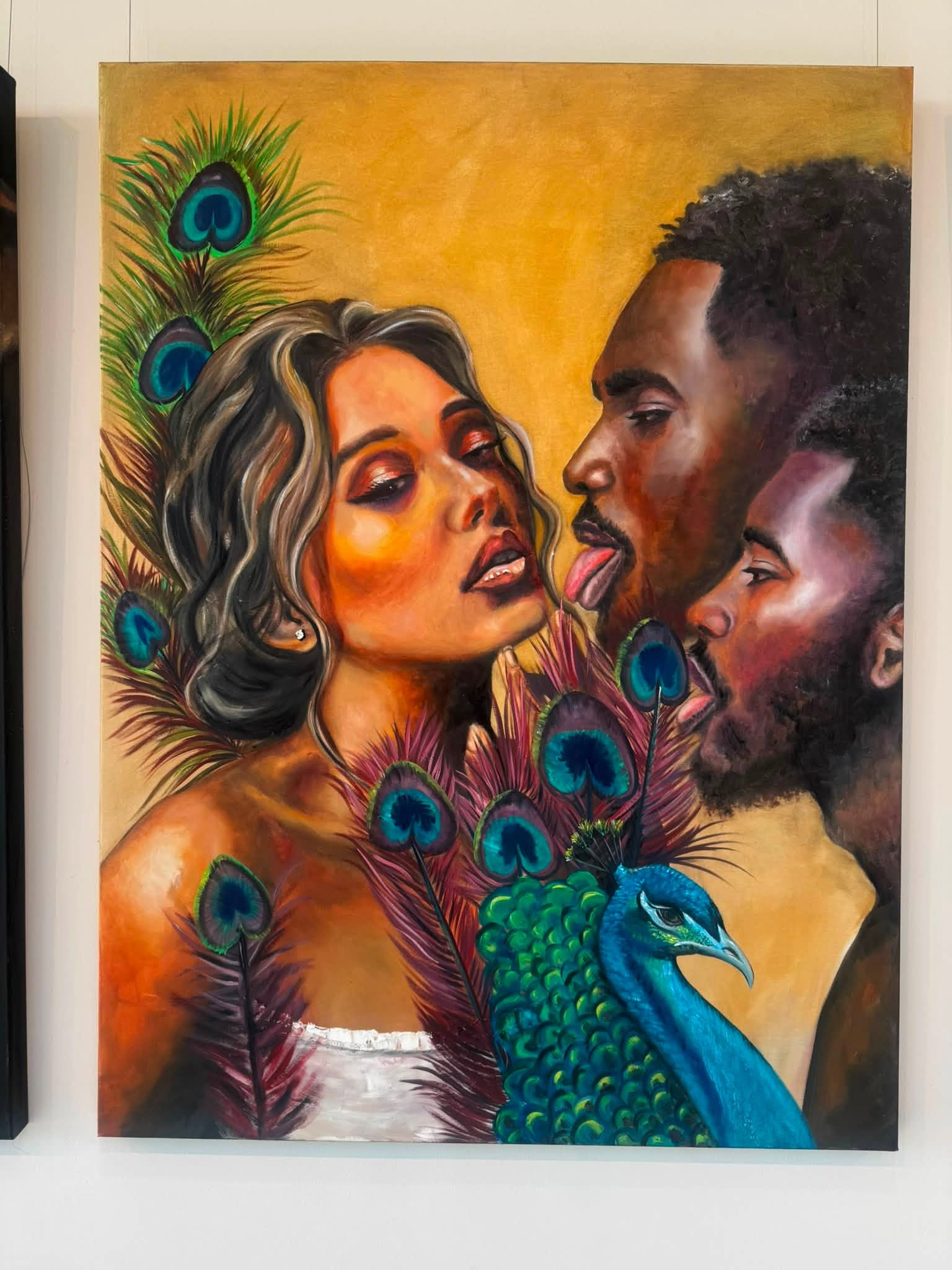 From there, Webber moves into Lust, featuring a beautiful woman and two African American men. Rather than creating the familiar image of one man and one woman, she intentionally introduced another person to make the viewer question who is actually lusting after whom.
“It could be two different people lusting after this woman, or she’s lusting after them,” Webber explained.
A peacock represents Lust, bringing beauty, attraction and display into the composition.
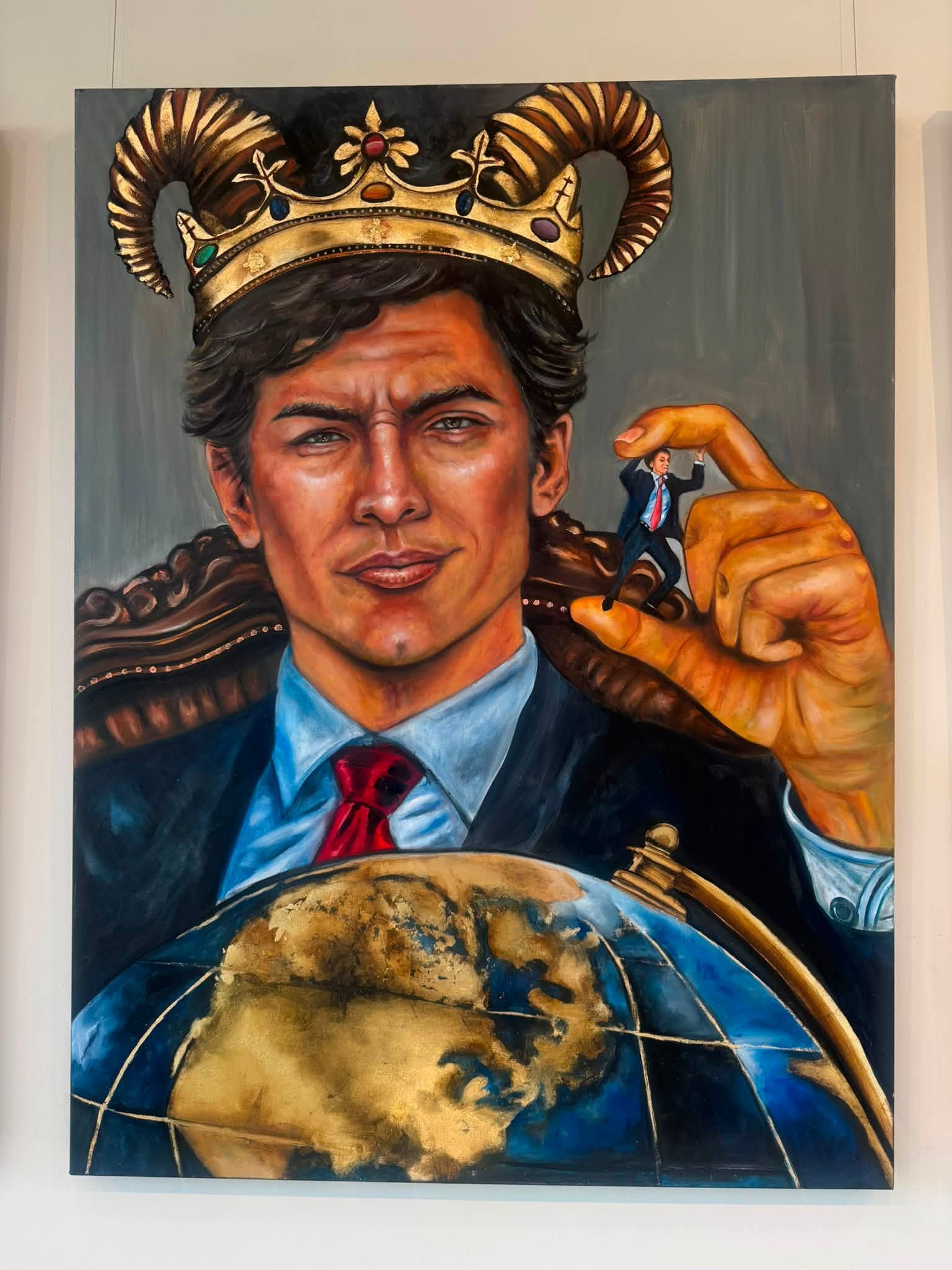 Pride takes a very different approach. Webber presents a man dressed in a suit and red tie, sitting in what resembles a king’s chair. He is surrounded by gold leaf, a crown and a world map, creating the image of someone who believes he has reached the top of the world.
The goat represents Pride.
The character’s exaggerated sense of superiority is intentional. He doesn’t simply want success—he wants to feel above everyone else.
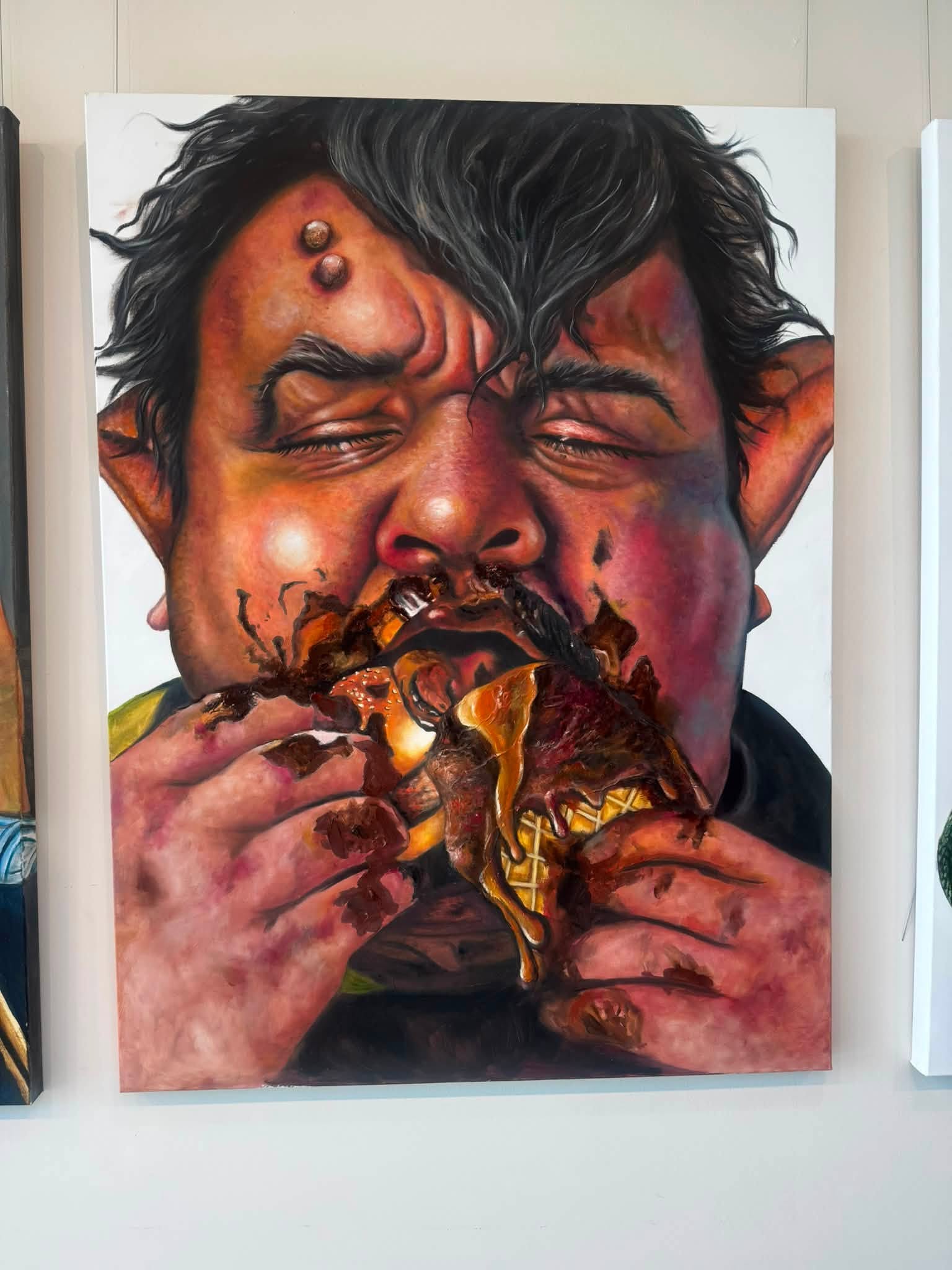 Then comes Gluttony, a piece Webber says is often confused with Greed.
It isn’t.
The character is shown eating a burger and ice cream at the same time, with food covering his face. The image is intentionally exaggerated to show someone who has gone beyond simply enjoying food and into excessive consumption.
The animal representing Gluttony is the hog.
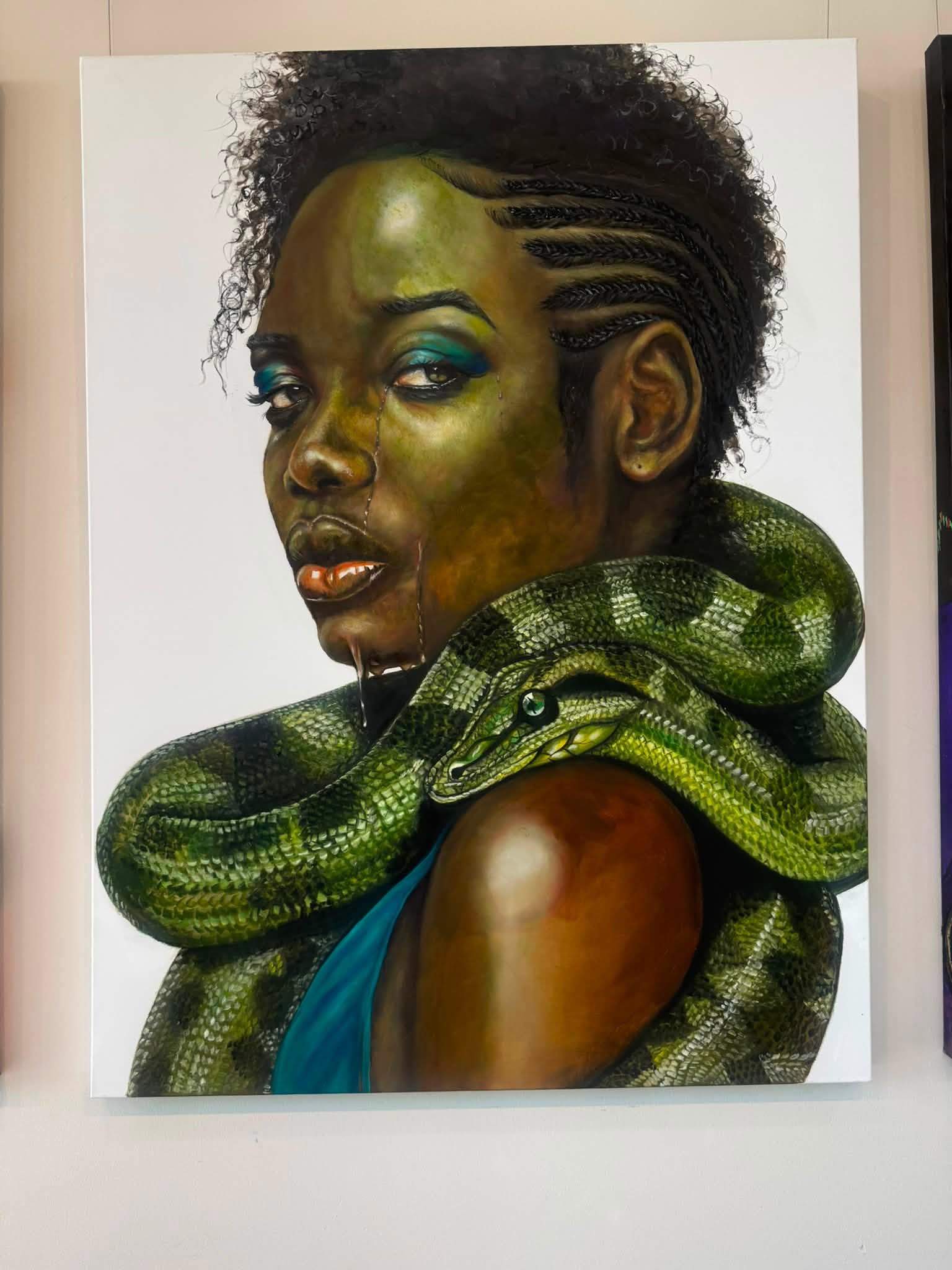 Webber’s Envy piece moves into territory that many people may find particularly familiar. The painting features an African American woman whose expression reveals resentment toward another person. She may be surrounded by friends, family or people within her circle, but beneath that relationship exists an envious spirit.
The snake becomes the symbol.
For Webber, that was important because envy doesn’t always come from strangers. Sometimes it can exist among the people closest to us.
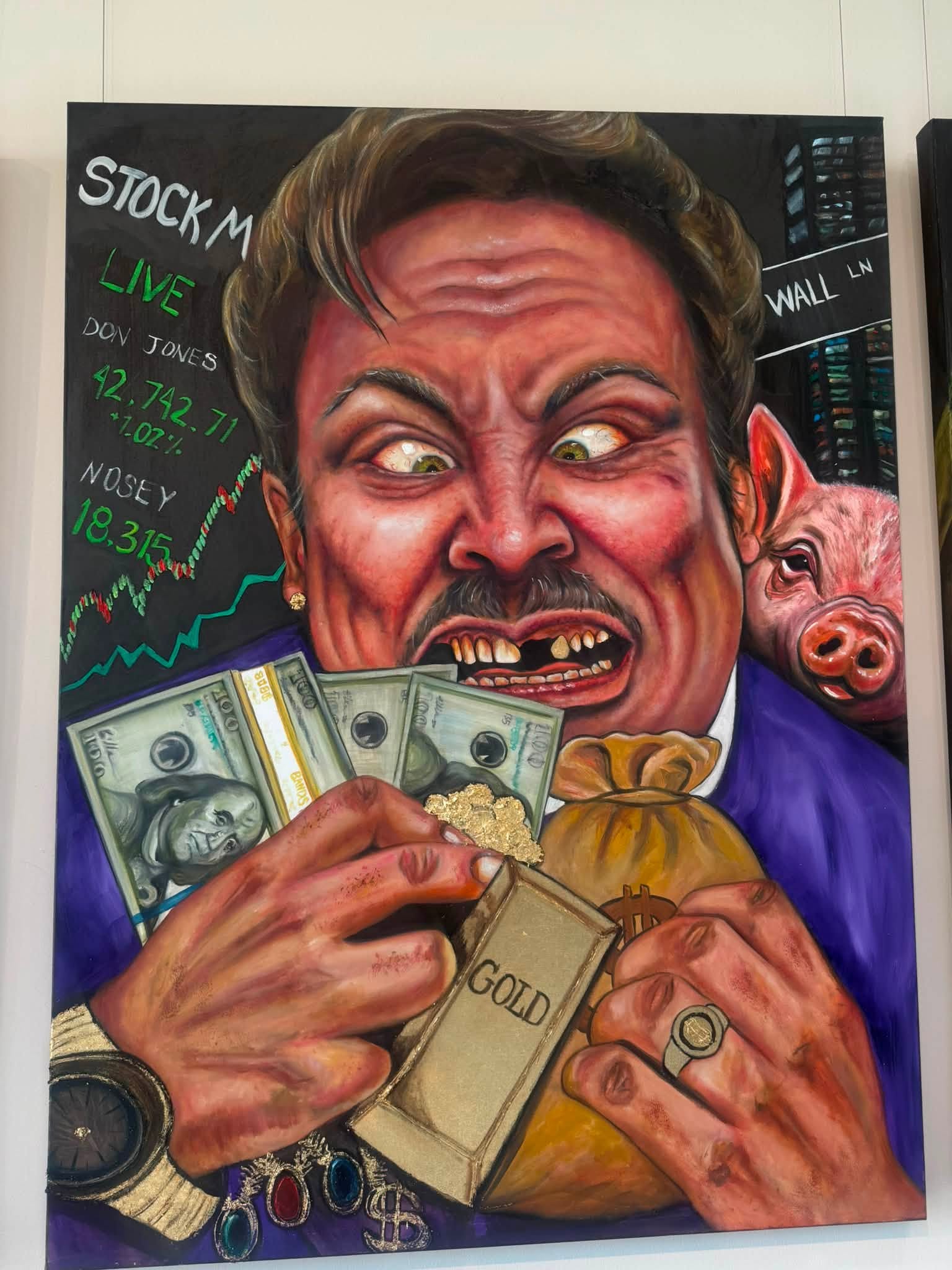 Greed takes viewers into the world of money, wealth and financial power. Webber created a character surrounded by stock-market references, gold and symbols of financial success. She even plays with familiar financial terminology, changing Wall Street to “Wall Lane” and Dow Jones to “Don Jones.”
Behind the character is a pig, reinforcing the idea of someone who wants more and more.
Webber also exaggerates the character’s appearance, including crossed eyes and missing teeth, to emphasize that this person’s obsession isn’t necessarily about how he looks or what others think. It’s about possessing everything.
“Got to have it all,” Webber said.
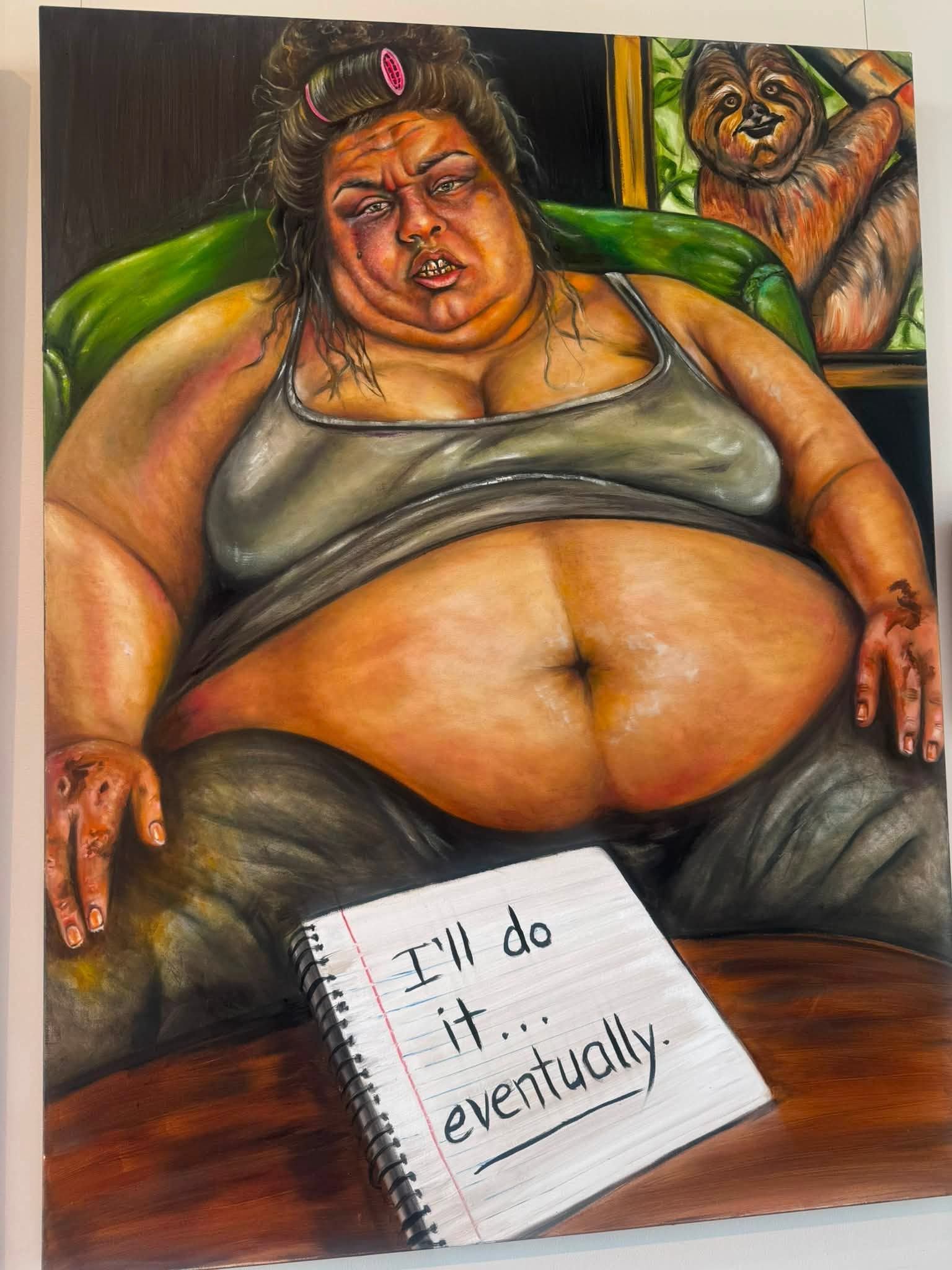 And then there is Sloth, perhaps the most humorous—and relatable—piece in the collection.
A heavyset woman sits in a chair with a notepad that reads, “I’ll do it eventually.” Behind her is a sloth.
The message is simple: procrastination, inactivity and constantly putting things off.
Webber’s daughter, India, immediately noticed the connection between the woman and the animal after seeing the work.
“She was like, ‘Oh, Mom, that’s so dope. I didn’t realize the woman actually looks like the sloth.’”
That kind of reaction is part of what Webber wants from the collection.
She doesn’t want people to simply walk past the paintings, admire the artwork and keep moving.
She wants them to think.
More importantly, she wants them to see themselves.
“I want people to actually see one of these seven sins and see themselves within at least one of them,” Webber said. “Because I feel like we’re all in at least one of them. Some of us are in more.”
That may be the most important message behind “The 7 Deadly Sins.”
Webber isn’t presenting these characters as people who are completely different from the rest of us. She is presenting exaggerated versions of behaviors that can exist in everyday life.
Anger. Desire. Ego. Overconsumption. Jealousy. The pursuit of wealth. Procrastination.
And underneath all seven is Webber’s belief that excess is where the problem begins.
Her work also reflects the importance of being able to participate in ArtPrize as a Grand Rapids artist. For Webber, the event provides something that artists often have to travel great distances to find: a major platform in their own backyard.
“I don’t have to go to L.A., Chicago, Houston, New York,” she said. “I am right here.”
That’s significant for Webber, particularly as a Black woman artist who wants people to see not only her work but the person behind it.
She wants visitors to see an African American woman standing in her own city, sharing her creativity with the world.
“I want people to see this African American woman stand before the world and share her gift of art, her gift of love, her gift of reality,” Webber said.
For Webber, that gift is also deeply connected to her faith. She describes her artistic ability as something given to her by God and sees herself as a vessel using that gift to connect with other people.
That’s why the response to the artwork matters to her.
She hopes there will be conversations. She hopes people will laugh. She expects some people may become uncomfortable. She hopes others will recognize themselves in one of the seven pieces.
And ultimately, she hopes people leave feeling better than when they arrived.
“There’s going to be people that are going to see themselves,” she said. “Hopefully they can walk away with a smile. They can walk away feeling better than how they came, and they can tell others about it.”
For those who want to experience more of Webber’s work beyond ArtPrize, her art gallery is located at 350 84th St SW, Suite 135, Byron Center, MI 49315. The gallery gives visitors another opportunity to connect with Webber’s work and see more of the artist behind “The 7 Deadly Sins.”
That is what makes E’lla Webber’s ArtPrize entry more than a collection of paintings.
It’s an invitation to look.
Then look again.
And maybe, somewhere between the wolverine, peacock, goat, hog, snake, pig and sloth, recognize something that looks surprisingly familiar.
Not necessarily someone else.
Maybe yourself.
Views: 7