

 By David Martin
What is one of your favorite movies dear reader? I like The Mountain Men from 1980 with Charlton Heston. Charlton Heston calls one of the characters from back east a flat lander. I am a flat lander. I have been to the Rockies and felt light headed as I wondered how Hitler’s SS trained partisan killers at like heights in the Alps. I wondered how the United States Army ever defeated the Native Americans when such an area could afford a hundred hiding places every one hundred yards. Such issues have historically debatable answers that hold a good deal of controversy. That was 2006.
However, 47 years earlier on the other side of the world on the west slopes of the Urals in the Soviet Union something happened to a skiing/hiking expedition that did not report back as planned. What investigators have turned up since February 1959 should interest the American public as much as the Russian public, for it holds a good deal of controversy.
The expedition was Igor Dyatlov, Zina Kolmogorova, Georgy Krivoneschenko, Rustem Slobodin, Nikolay Thibault Brignoles, Yuri Yudin, Yuri Doroschenko, Aleksandr Kolevatov, Lyuda Dubinina, and Semyon Zolotaryov. With the exception of Zolotaryov the expedition consisted of recent graduates or attendees of the Ural Polytechnic Institute, the athletic department of, which willingly endorsed the expedition. The point was to ski and hike across a section of the Ural Mountains where few if any Russians had ever been. The youth of the expedition was meant to highlight the toughness and rigidity of a younger Soviet generation that was ten years old or younger at war’s end 1945. Semyon Zolotaryov was the exception to this. He had served in the Soviet Army during World War II. He was thirty-seven years old. He belonged to a sociologically butchered generation that was prime recruiting age in 1941, but by 1945 there were few left because so many had been killed in action fighting the German Army. Zolotaryov was abruptly added at the last minute to the expedition by the Ural Polytechnic Institute.
Between January 23 and 27 the expedition traveled by train, truck, bus, and even sleigh to get to a defunct logging facility called Second Northern. It was from this point that the expedition began it’s hiking and skiing trek that would take them to a village called Vizhai. From that point the expedition was to telegram the UPI and tell them of their success. The trek was supposed to last from January 28 to February 12. It was at this beginning juncture that the team lost Yuri Yudin to a severe back ache. Yuri turned back and was not a part of what happened next.
February 12…no word from expedition…no problem…delays and setbacks were expected from the start. February 20—a search begins and includes student volunteers, prison guards from Ivdel which the expedition passed through on their way north starting from Sverdlovsk, local police, Mansi Indians, and the Soviet Army even contributed planes and choppers for aerial search purposes.
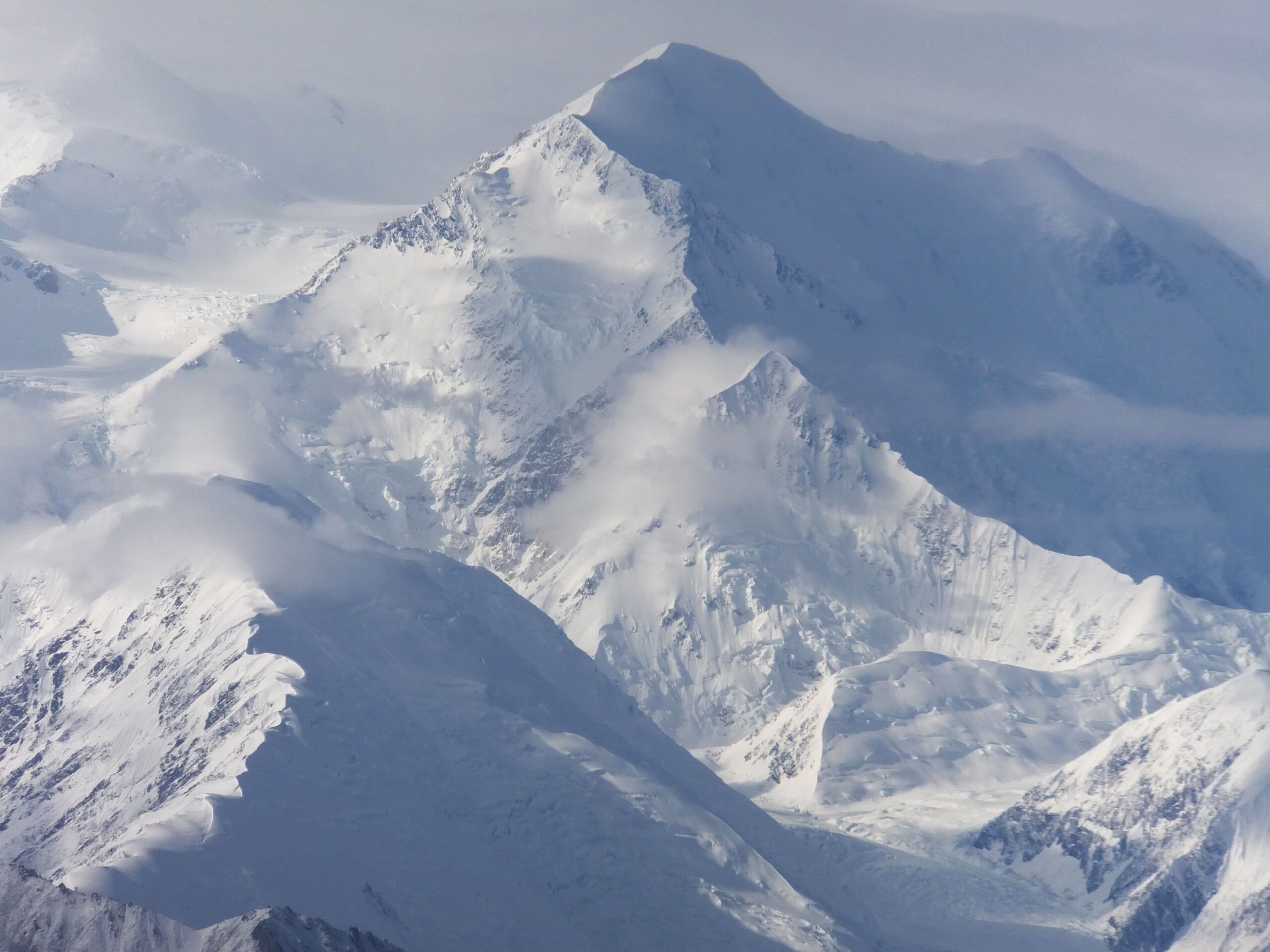
February 25-28—Evidence begins turning up. The team’s tent was found partially buried but suspiciously slashed yet well-kept inside. It was found on the slope of a mountain that Soviet Officials called Height 1079. The Mansi Indians called it, more descriptively, Kholat Syakhl or Dead Mountain. Foot print evidence in the snow indicated 8 or 9 people bare or sock footed, at least one person had managed to put on a ski boot. The search party went on to find the bodies of Kolmogorva and Dyatlov. They were found in the snow in a way indicating that they were trying to get back to their tent. Farther downslope, in a grove of trees, Krivonischenko was found with Doroshenko they were lifeless in the snow next to a burned-out fire. Rustem Slobodin was found a short time later. He had been trying to make his way up slope as well. All recovered bodies had multiple scratches, bruises, and cuts. Slobodin had a fracture in his skull. Doroschenko and Krivoneschenko had blackened skin, and Krivoneschenko had bitten a chunk out of his right hand.
With a melting in early May the rest of the team was recovered. A Mansi Indian and his dog found the opening of a snow cave. Aleksandr Kolevatov, Semyon Zolataryov, Lyuda Dubinina, and Nikolay Thibault Brignoles were all found in a creek bed under nearly ten feet of snow. They were found less than a hundred yards from where Krivoneschenko and Doroschenko had died. Zolotaryov and Dubinina were found with crushed chests and Brignoles’s head was crushed with chunks of his skull pushed into his brain. Mysteriously, the injuries were quite severe but showed no exterior damage coming from an outside bludgeoning tool. All the bodies found around the creek also showed radioactive contamination, the levels of which were considered to be down from a higher level as the bodies had been found in running water. Surely Soviet Authorities had months of work to do before coming to a conclusion…hardly.
On May 28, 1959 Soviet prosecutor Lev Ivanov closed his investigation. His job had been to determine if any foul play had been involved. The vagueness and evasion of his conclusion provides a window on why family and friends of the dead have screamed cover up since 1959. Lev Ivanov’s closing statement: “It should be concluded that the cause of the hikers’ demise was an overwhelming force which they were not able to overcome.” (Douglas Preston, The Lost Tomb pg. 68).
A large valley nearby where the expedition was found came to be called Dyatlov Pass therefore the whole event became known as the Dyatlov Pass Incident. Ideas came and went regarding what happened to the expedition. Military and extraterrestrial explanations dominated.
A camera found in sifting the evidence showed a strange display of lights in one of the frames. Did someone see and shoot an extraterrestrial display before running in fear. No, it was merely the end of the film roll and a common quirk that occurs with the taking of the last picture. Another frame showed what appeared to be a large predatory critter approaching someone in the dark who had a camera, and suddenly everyone ran from a giant snow monster….no it was determined, on close examination, to be a member of the team bundled up for heavy weather acting like a snow monster.
Semyon Zolotaryov was suspected of being part of the expedition because he was a spy working for the KGB, and he was supposed to meet CIA operatives and feed them bogus information. The waiting group killed the expedition. No…such an exchange would less likely happen in the middle of nowhere and would more likely happen on a street in a place like Riga, or Leningrad, or Kiev. To top it all off no wounds were found to indicate shooting, stabbing, bludgeoning, or any action controlled by another person. Why was Zolotaryov added so abruptly when he was so generationally out of place?
Another idea was that the expedition was murdered by Mansi Indians because the expedition was on ground, they held sacred. This makes little sense. If the Mansi had done it why would a hunter and his dog from among them find the bodies and draw negative attention to themselves. Further interviews among the Mansi showed that they actually had favorable views of Russians and would not have harbored a motive to hate and kill a hiking/skiing expedition that was just passing by on ground they didn’t hold sacred. So…what ultimately happened? A reinvestigation in 2019 would be just as controversial. Russian prosecutor Andrei Kuryakov and his team would reach a conclusion that fear of an avalanche had sent the team running from their tent in -25-degree weather. In the pitch black they froze death unable to find their way back to their tent. The investigation had answers: The partially covered tents were said to be a snow slide, not an avalanche. A snow slide is several hundred pounds. An avalanche is several hundred tons. The investigation concluded that the team could not get to their heavy weather gear because the snow slide had covered it with too much snow to immediately dig through. It hardly helped that the investigation stated that the team might have inadvertently caused a snowslide by digging a redoubt for their tent that was too deep, causing a fracture farther up slope. The blackened flesh of the dead found in February was said to be members who were mentally fading and holding exposed flesh in the fire they had built unable to feel the burn. The bite mark on the hand was said to be Krivoneschenko going into mental failure thinking his hand was fresh food. The dead found in May were said to have been killed by a snow cave collapse as the creek they were found in was thought to be iced over but wasn’t. The mutilations to their faces were said to be foraging critters. The distance at which the expedition was found from their tent was about a mile. Kuryakov’s investigation showed that the team fled to a rock outcrop fifty yards away from their tent from there they could not find their way back through winds that were up to 65 miles per hour in pitch black darkness, so the team tried to shelter in nearby woods.
One overarching fact was never lost on the new investigation…all footprints belonged to the expedition. No bullets, no bludgeoning tools, no print of winterized jackboots in the snow. It showed that no Soviet Military section could have killed the expedition, but talk of a cover up persisted and was not entirely unfounded because of the radiation found with the bodies recovered in May 1959. Yuri Doroschenko worked at a nuclear facility called Mayak in Chelyabinsk that processed uranium for the Soviet Army. On September 29, 1957, a cooling system failure left stored nuclear waste to get too hot and blow a 160-ton concrete cap set in place on top of it. The radioactive release affected 270,000 people over an area of more than 12,000 square miles, 20 villages were evacuated with 11,000 people needing to be moved. Nuclear waste had also been dumped into the Techa River between 1949 and 1952. All too easily a full investigation of the Dyatlov Pass Incident could have exposed the aforementioned facts about the Mayak Disaster to the global public and destroyed any credible standing the Soviet Union had on the global stage. Was Semyon Zolotaryov abruptly added to the expedition to keep his ears open as to who knew what about the disaster? Was the radioactivity in the creek where part of the team was found evidence that contamination had spread through creeks and rivers farther and wider than Soviet authorities wanted to admit? As nuclear disasters go, Mayak sits in an ugly third place behind Chernobyl and Fukushima.
In the end why should the American public care as much as the Russian public…?
By 1960 CIA spy flights and ground contacts knew the extent of the damage caused by the Mayak blast. The CIA helped hide the story for nearly thirty years. When a man named Zhores Medvedev emerged in 1976 talking about the blast, the CIA was quick to down play his story. It was not until 1989 that a complete admission from the CIA emerged where their motivation for helping the Soviet Union bury the truth of the Mayak Blast was to protect America’s own interests in nuclear weapons and nuclear energy.
So…what is not at all unfairly asked today about the CIA? Has the CIA ever killed U.S. Military officers who got in the way of operations abroad? What was the CIA role in the Kennedy assassinations of 1963 and 1968? To what extent was the CIA involved with the People’s Temple Cult and its mass suicide in Guyana in October 1978? Just what is in the most classified files of the CIA in vaults that are said to not exist? How are such questions and many others not unfairly asked when it is obvious that the CIA and the Soviet Union were co-conspirators to hide an event that would have caused a revolution in energy science that would have correctly destabilized and destroyed an idiotic status quo.
Views: 9