

ArtPrize is back, and once again Grand Rapids has become a city-sized canvas.
For a few weeks, museums, galleries, businesses, churches and public spaces become places where visitors experience the work of artists from Grand Rapids and around the world. With more than a million visitors expected this year, ArtPrize remains one of the city’s biggest cultural events.
But beyond the crowds and economic impact is another issue worth considering: representation.
When Grand Rapids puts itself on display for the world, who gets to tell the story?
Black artists are an important part of this year’s ArtPrize landscape, including E’lla Aimee Webber, a Grand Rapids-born Black female artist whose Seven Deadly Sins is being exhibited at DeVos Place Convention Center.
Webber is more than an ArtPrize participant. Her career includes painting, sculpture, gallery work, murals and community projects, making her part of the broader visual arts community that continues to shape Grand Rapids.
Then there is photographer Alfield Reeves, whose work approaches representation from another direction.
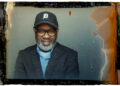
The Grand Rapids Art Museum commissioned Reeves for In Case You Didn’t Know, a public installation featuring large-scale portraits of seven Black and brown Grand Rapidians whose contributions to the city have not always received the recognition they deserve.
Their faces are now part of the public landscape.
Their stories are visible.
And sometimes, simply being seen matters.
Grand Rapids has a long Black history, but much of that history isn’t necessarily visible to visitors. Generations of Black residents have helped build neighborhoods, businesses, institutions and cultural movements that shaped the city. Some are well known. Many are not.
That’s where artists like Webber and Reeves become important.
Webber is adding her voice and creative work to one of the city’s largest arts events. Reeves is documenting people whose stories deserve to be remembered.
They are doing different things, but both are contributing to the visual record of Grand Rapids.
ArtPrize gives the city an enormous opportunity to introduce itself to people who may have never been here before. Visitors aren’t just looking at art. They’re experiencing a city and forming impressions of its culture and identity.
That makes representation important.
Having Black artists participate matters. So does making sure visitors have opportunities to discover Black history, Black cultural institutions and the broader creative community beyond the competition itself.
The Grand Rapids African American Museum & Archives is one example, giving ArtPrize visitors another opportunity to experience African American history and culture.
And the conversation extends beyond art.
The city says ArtPrize generated $82.6 million in economic impact last year, with more than 967,000 visitors. With more than a million expected this year, the event will bring significant attention and spending into Grand Rapids.
Grander has already raised the economic question: How much of that activity reaches Black-owned businesses?
The cultural question is just as important: How much visibility reaches Black artists and the stories they are telling?
Those are things worth documenting rather than simply assuming.
Because ArtPrize isn’t just an arts competition anymore. It has become part of Grand Rapids’ identity and one of the ways the city presents itself to the world.
Black Grand Rapids is already part of that identity.
The artists are here. The history is here. The businesses, photographers, musicians, educators, institutions and community leaders are here.
So are the stories.
Artists like E’lla Webber and Alfield Reeves are helping make some of those stories visible.
And perhaps that’s one of the most important things art can do.
It can make people, places and histories impossible to overlook.
When the world comes to look at Grand Rapids, Black Grand Rapids should be part of what they see.
Views: 4