
With The Fall-Off rumored to be his final album, the North Carolina rapper takes it back to the pavement — selling CDs hand-to-hand like it’s 2007.
By the time most rap veterans hit their forties, they’re chasing chart metrics, brand partnerships, or nostalgia tours. J. Cole? He’s back in the parking lot.
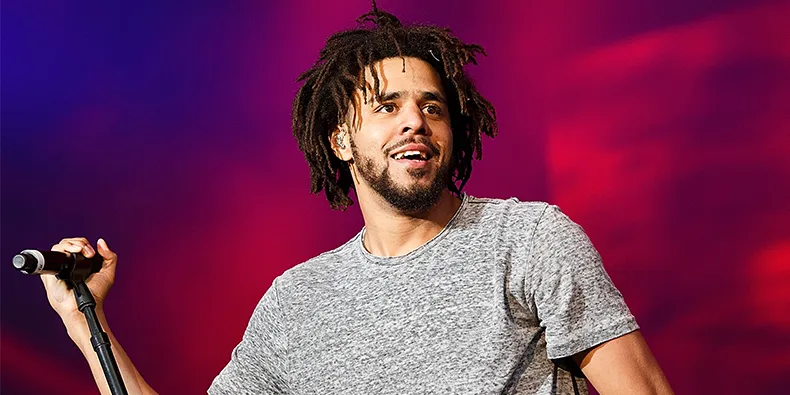
Fresh off the release of The Fall-Off — the long-teased project many fans believe could mark the closing chapter of his album career — the Fayetteville MC has traded streaming dashboards for street corners, launching what he calls the “Trunk Sale Tour ‘26.” The concept is beautifully simple: pull up in his old Honda Civic, pop the trunk, and sell physical copies of the album directly to fans.
No VIP passes. No Ticketmaster fees. Just Jermaine and a stack of CDs.
“When I was working on this album I had the desire to go feel that feeling again,” Cole shared in a video posted to social media. “That’s what I’m about to do. Trunk Sale Tour 26!! I don’t know where we ’bout to drive to, but catch me outside! Cop a CD from me or just show love.”
The footage feels almost surreal. One moment, a group of college students are walking across campus. The next, J. Cole is standing in front of them, trunk open, smiling like a local indie rapper trying to move his first hundred units. Stops have included Greensboro, South End, and college campuses like North Carolina A&T and UNC Chapel Hill, where crowds quickly swell into chaotic, joyful mobs.
The symbolism isn’t accidental.
Before platinum plaques and Dreamville Festival headlining slots, there was a teenage Cole outside gas stations pushing CDs with nervous ambition. “As a teenager I had copies of the Fayettenam Bommuh’s album that Nervous gave me to sell,” he recalled. “I used to go up to the gas stations trying to sell the album to strangers, ‘Yo, you like hip hop??’ That was the beginning of the sales pitch.”
Nearly two decades later, the pitch hasn’t changed — only the stakes have.
The Fall-Off arrives draped in the weight of finality. For years, Cole has hinted that the album would be his last major statement, the culmination of a career built on introspection, discipline, and a near-stubborn commitment to authenticity. If this is the end of his studio run, the trunk tour feels less like promotion and more like ritual — a cleansing return to the origin story.
In an era where albums materialize at midnight and disappear into playlists by morning, Cole is choosing friction. He’s choosing physical interaction. He’s choosing eye contact.
And fans are responding accordingly. Videos circulating online show students screaming, sprinting, and lining up for the chance to exchange a few dollars and a handshake with one of hip-hop’s most deliberate architects. There’s laughter. There’s disbelief. There’s reverence.
It’s also a quiet flex.
At 41, Cole doesn’t need to do this. He’s built Dreamville into a powerhouse imprint, headlined festivals, and carved out a lane as rap’s thoughtful elder statesman without ever sacrificing commercial viability. Selling CDs from a trunk isn’t about necessity — it’s about narrative control.
In many ways, the move echoes hip-hop’s earliest ethos: build your base, touch the people, let the music travel by word of mouth. It’s the antithesis of algorithm worship.
Cole hasn’t revealed where the Civic will roll next, and that unpredictability only adds to the mythos. The possibility that he could appear in any parking lot, on any campus, in any North Carolina city keeps fans glued to their feeds.
If The Fall-Off truly is his curtain call, J. Cole is making sure the exit feels personal.
Because before the arenas, before the Grammys, before the think pieces — there was a young kid asking strangers a simple question:
“You like hip hop?”
Turns out, they still do.
Views: 36